
HTA Construction: 9 systems, one ERP.
Every morning, someone logged into four banks and copied balances by hand, about an hour of senior accounting time a day. WIP was rebuilt by hand every cycle. Today, bank feeds, WIP and 811 compliance checks run automatically, and leadership sees current numbers instead of week-old ones.
You probably need this if…
Your people are the integration layer.
Data moves between accounting, project management, sales and payroll by copy and paste.
Month-end takes a week.
Closing depends on reconciling exports from systems that disagree.
You're about to buy another platform.
Before adding a tool, you want to know whether connecting the ones you have would solve it.
Operations still run on paper or email.
Orders, logs and approvals live in inboxes and binders.
Operational fixes, backed by data.
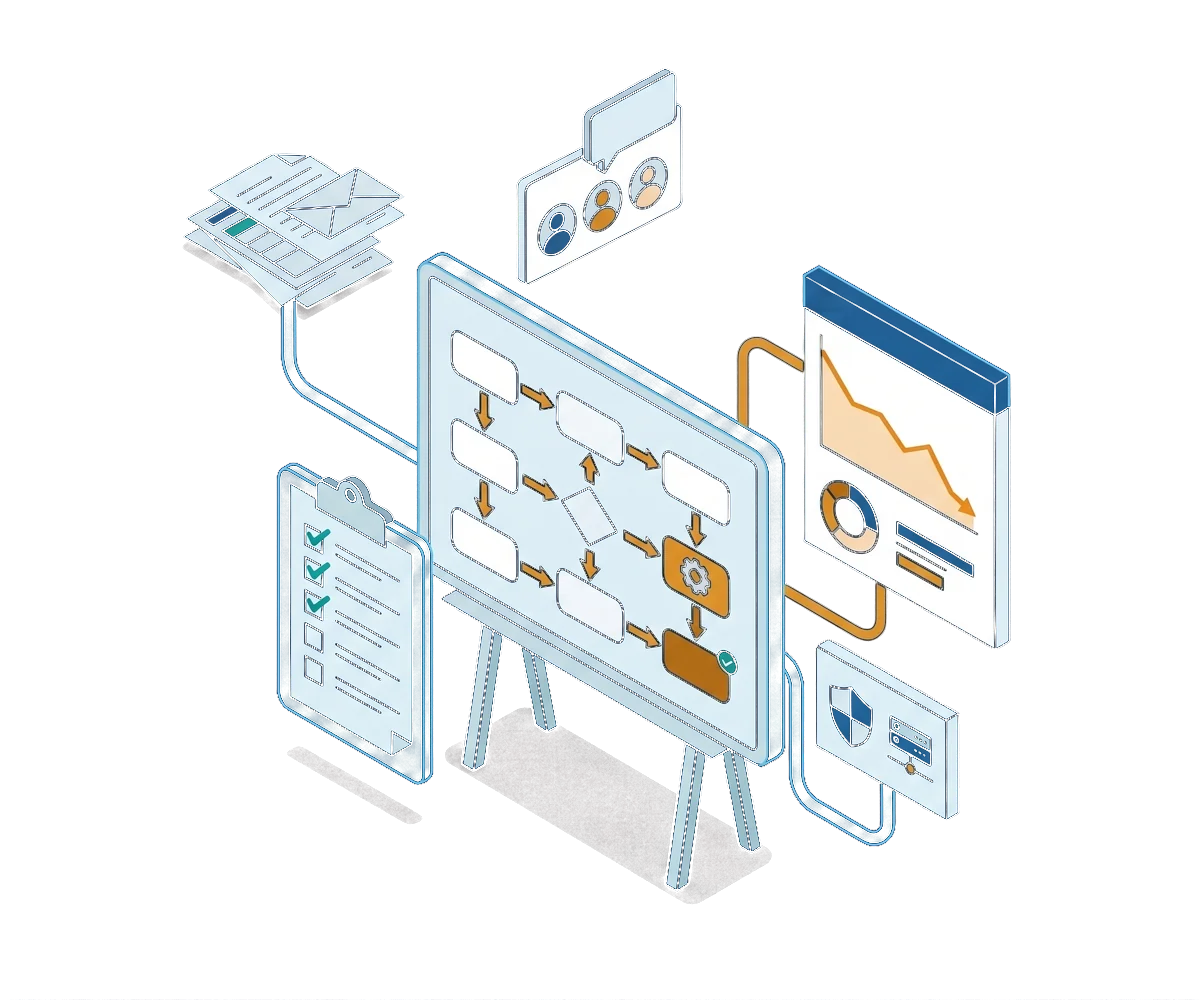
We review how your business actually runs today, then design the smallest change that produces the biggest improvement.
From automation to agents.
Classic automation follows a fixed script. Agentic automation reads the situation (an email, an invoice, a change order) and takes the next step, asking a person when it isn't sure.
Proposal builder
AI pulls line items from plans and past estimates, so sales stops retyping them by hand for every proposal.
Invoice & AP agent
Reads vendor invoices, matches them to purchase orders and flags exceptions for approval.
Inbox triage
Sorts incoming requests, drafts replies and routes them to the right department.
What we bring to the table
Consulting
Commercial strategy and planning built around your actual constraints, not a generic playbook.
Analytics
Strategic IT planning and business analytics that turn data into a competitive edge.
Process review
A hands-on assessment of where your environment is creating friction instead of removing it.
Systems & infrastructure audits
Document review, stakeholder interviews and a system-by-system check of hardware, software, network and security against your business goals.
A process built
to de-risk.
Three phases, each ending in something you can review.
Discovery
We pin down the outcome worth solving for, and audit hardware, software, network and data security before any process gets touched.
Connect & automate
Integrations and automations built in two-week sprints, starting with the handoff that costs the most.
Implement & measure
Dashboards and regular reviews keep the change accountable to the number you agreed on.
Process change that holds up past the workshop.
For leadership
For teams
For customers
Do we have to replace our ERP?
Usually not. We connect what you already run and only recommend replacing a system when connecting it would cost more over time.
Which systems can you integrate?
Any system with an API, a database or a reliable export.
How long until something is automated?
Discovery takes 1-2 weeks. The first automation usually ships in the first build sprints after that.
What does a systems audit include?
Document review, stakeholder interviews and a system-by-system evaluation of hardware, software, network and security, benchmarked against your business goals.